

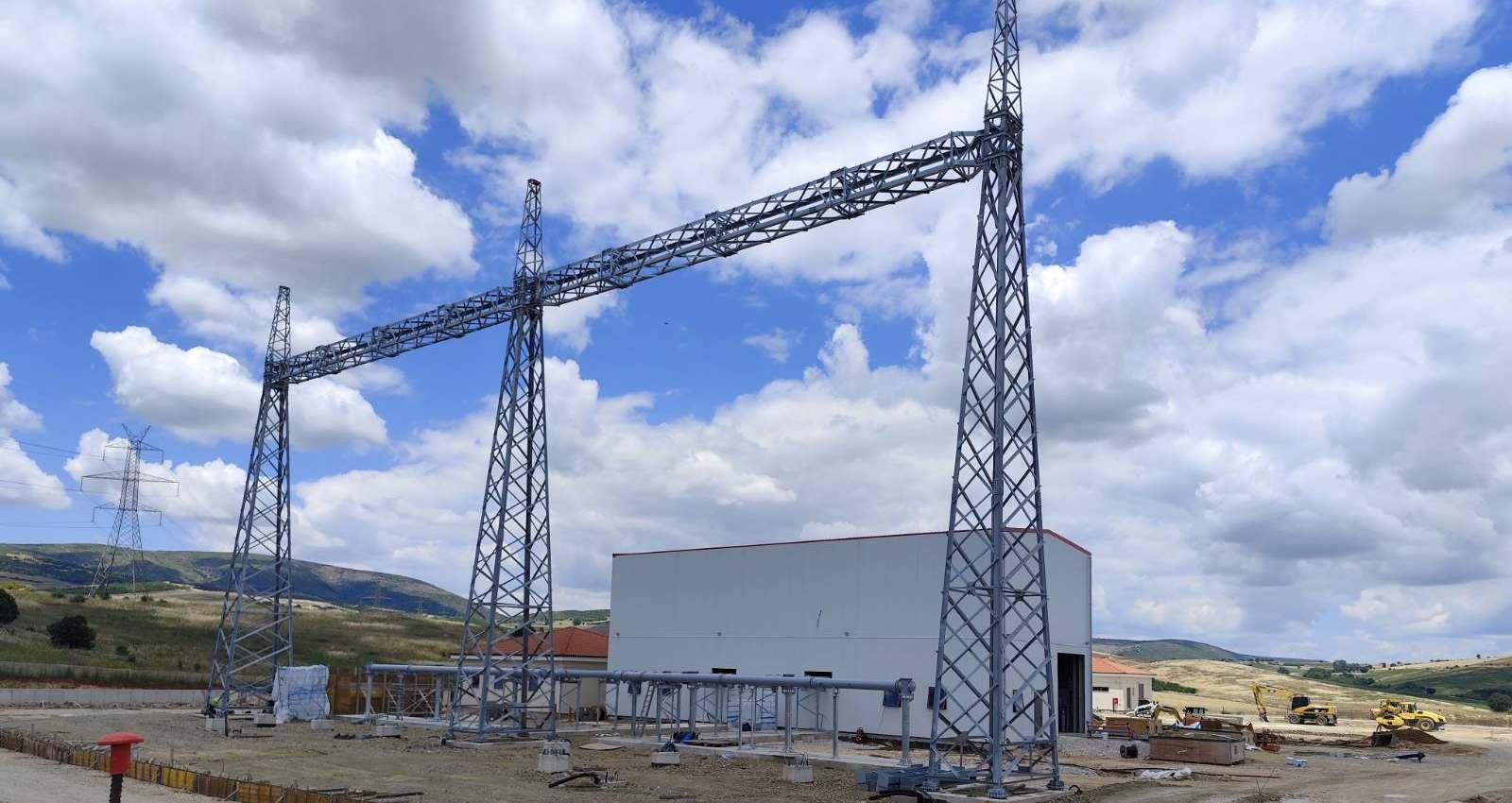
Construction of the new Extra High Voltage Substation “Achladia”
How EKVASIS Engineering used IDEA StatiCa Connection and 3D Detail to design critical steel connections, anchorage and concrete foundations for a high-voltage substation in Greece.
A 27 m tall steel gantry supporting 400 kV overhead lines requires careful assessment of how loads travel through its connections and into its foundations. For a project in Phthiotis, Greece, EKVASIS Engineering combined global structural analysis in SAP2000 with detailed verification in IDEA StatiCa.
The assessment covered the complete steel superstructure, its connections and three reinforced concrete foundations, with design checks carried out against the relevant Eurocodes and the specifications of IPTO, Greece’s Independent Power Transmission Operator.
Project at a glance
- Project: Structural assessment of a 400 kV gantry and its foundations
- Location: Phthiotis, Greece
- Structural engineering: EKVASIS Engineering
- Engineers: Konstantinos Anagnostopoulos and Vasiliki Kopanoudi
- Construction: ELECTROMEC S.A.
- Applications: IDEA StatiCa Connection, IDEA StatiCa 3D Detail and Checkbot
- Global structural analysis: SAP2000
Supporting high-voltage transmission lines
The gantry is a bridge-type steel framework comprising three lattice towers supporting two bridge spans. With towers spaced 25 m apart, the superstructure reaches an overall height of 27 m and weighs approximately 40 tonnes.
Each tower is anchored to an independent reinforced concrete foundation.
Installed within a 33/400 kV substation operated by IPTO, the gantry supports incoming and outgoing overhead lines. It must maintain the required electrical clearances while resisting the mechanical tension of the conductors and the environmental actions acting on the structure.
Critical connections under demanding loads
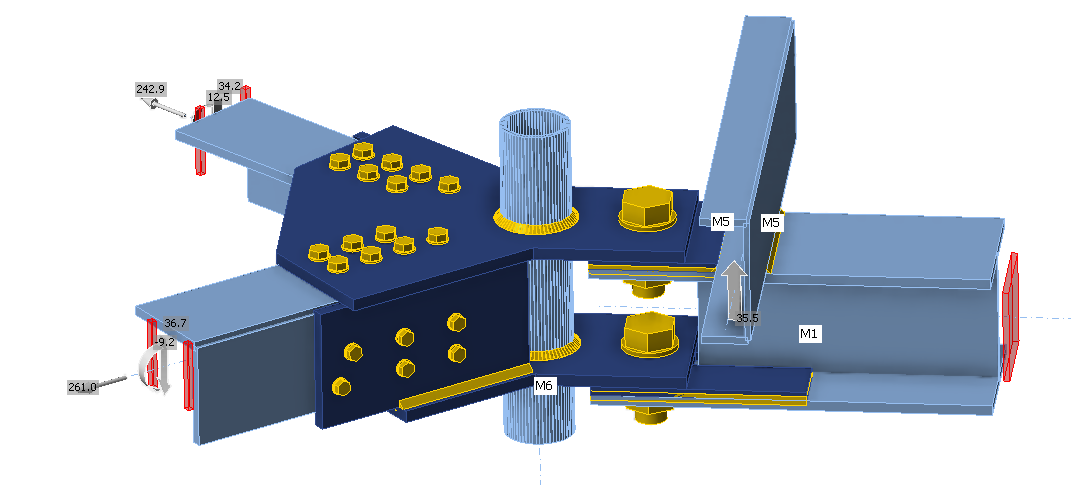
One of the main engineering challenges was the connection between each bridge span and its supporting towers.
These pin connections transfer the bridge loads into the towers. Each span is subjected to a static horizontal terminal load of 95 kN at approximately 20 m above ground level, giving a total terminal load of approximately 190 kN. The resulting forces and moments make this interface particularly important to the structural assessment.
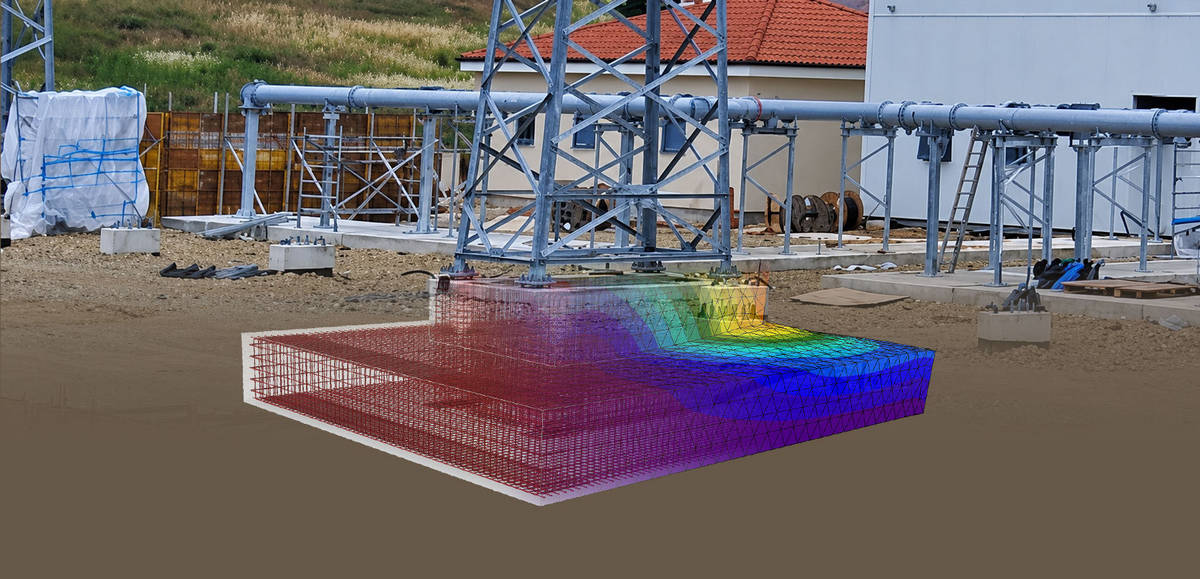
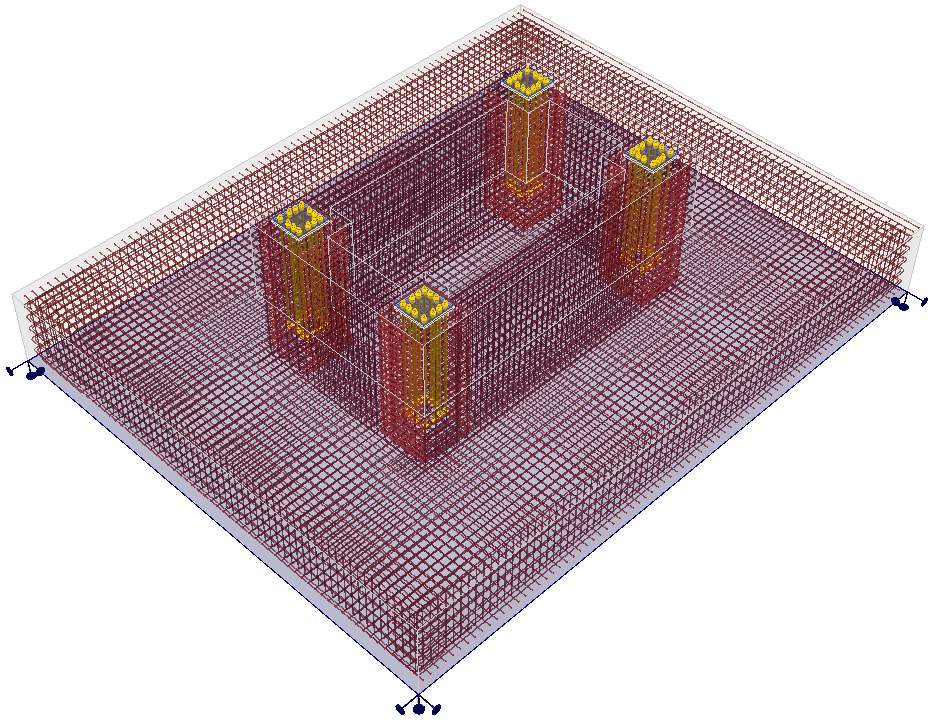
The foundations also required verification of their resistance and stability against overturning.
The team assessed dead loads, wind, seismic actions, ice and snow, thermal effects, terminal loads and maintenance loads. Load combinations followed the client’s specifications.
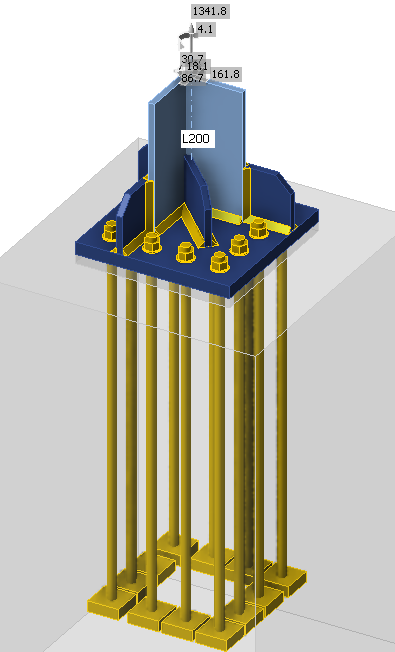
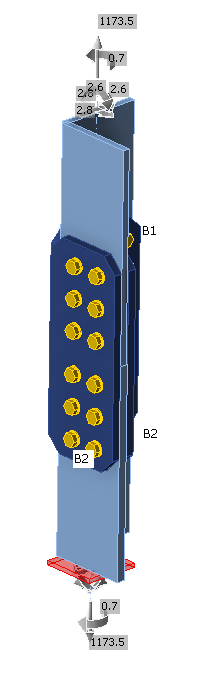
Alongside seismic actions, wind acting at 45° was a critical design condition. This direction produces simultaneous longitudinal and transverse effects, increasing the demands on structural members and connections.
With many similar connections and a large number of load combinations, identifying and checking the governing cases was a substantial part of the engineering work.
From global analysis to detailed verification
EKVASIS used SAP2000 to model, analyse and code-check the steel superstructure. IDEA StatiCa provided the detailed assessment of the connections and the concrete base system.
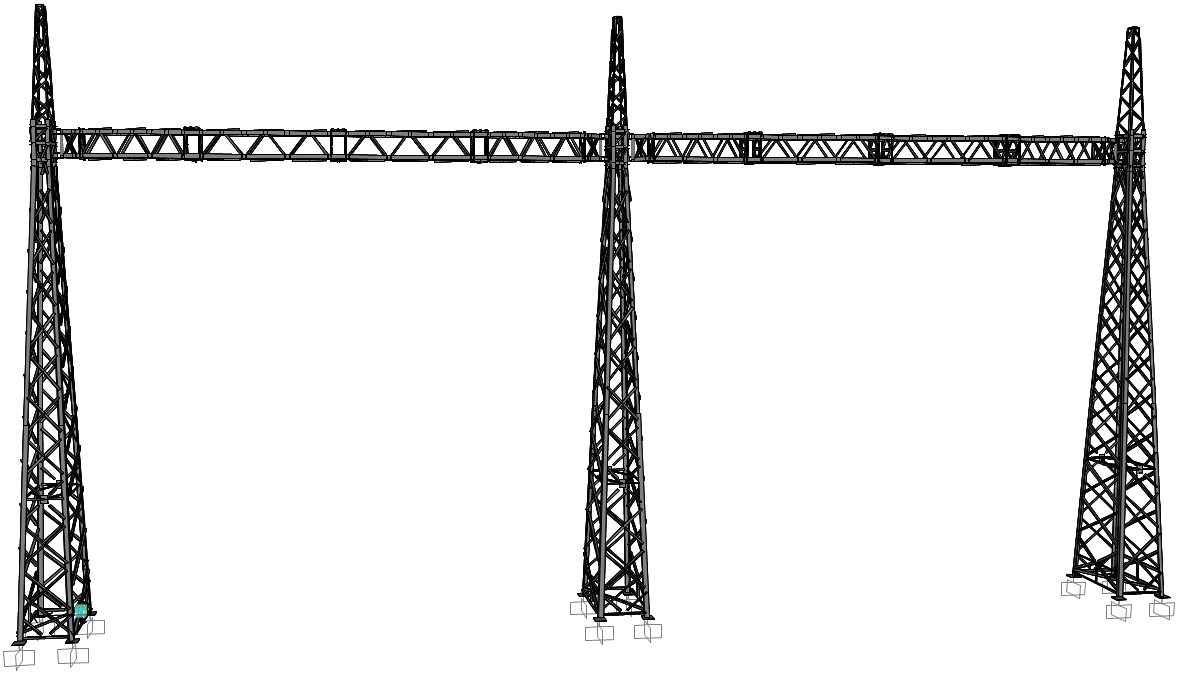
IDEA StatiCa Connection enabled the engineers to examine the steel connections beyond the level of detail available in the global analysis model. This gave the team greater insight into connection behaviour than conventional hand calculations could provide.
IDEA StatiCa 3D Detail supported the assessment of the concrete bases, complementing the verification of the anchorage and base connections.
To manage the repeated connections efficiently, the team used Checkbot to identify the most critical connection cases. This helped focus detailed verification on the governing scenarios across the extensive set of load combinations.
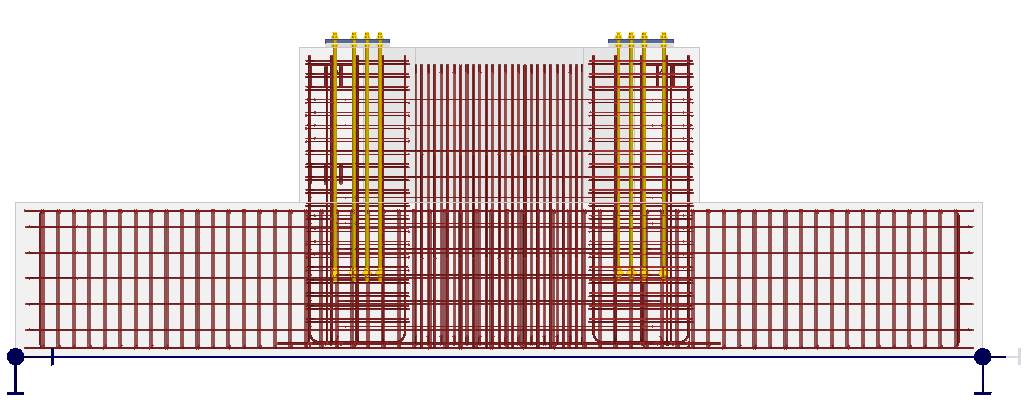
A coordinated assessment of the structural system
Combining global analysis with detailed connection and concrete assessment allowed EKVASIS to verify the critical interfaces throughout the gantry, from the bridge-to-tower pin connections to the anchorage and foundations.
The workflow provided detailed insight into the areas where loads pass between structural components, while helping the engineers manage the volume of connection checks more efficiently.
The project illustrates the value of considering steel connections, anchorage and concrete foundations together when assessing transmission infrastructure under operational, environmental and seismic loads.
About EKVASIS Engineering
EKVASIS Engineering is a specialized engineering consulting company providing advanced seismic and structural qualification services for electro-mechanical substation equipment and associated civil infrastructure. Based in Greece and serving clients worldwide, the company supports utilities, grid operators, EPC contractors, and turn-key manufacturers across the global energy sector.
EKVASIS Engineering delivers comprehensive solutions for the seismic and structural assessment, qualification, and certification of equipment installed in existing substations, ensuring compliance with international standards and project-specific requirements. The company also provides structural assessment and verification services for substation civil structures and foundations, evaluating their capacity to withstand operational, environmental, and seismic loads.
In addition, EKVASIS Engineering develops retrofit strategies and standardization solutions that enhance asset resilience, operational reliability, and cost-effective implementation across transmission and distribution networks. Through its technical expertise and international project experience, the company helps clients improve the safety, performance, and longevity of critical energy infrastructure in both conventional and seismic-prone environments.
More info: https://ekvasis.com/
Structural Engineers

Anagnostopoulos Konstantinos