

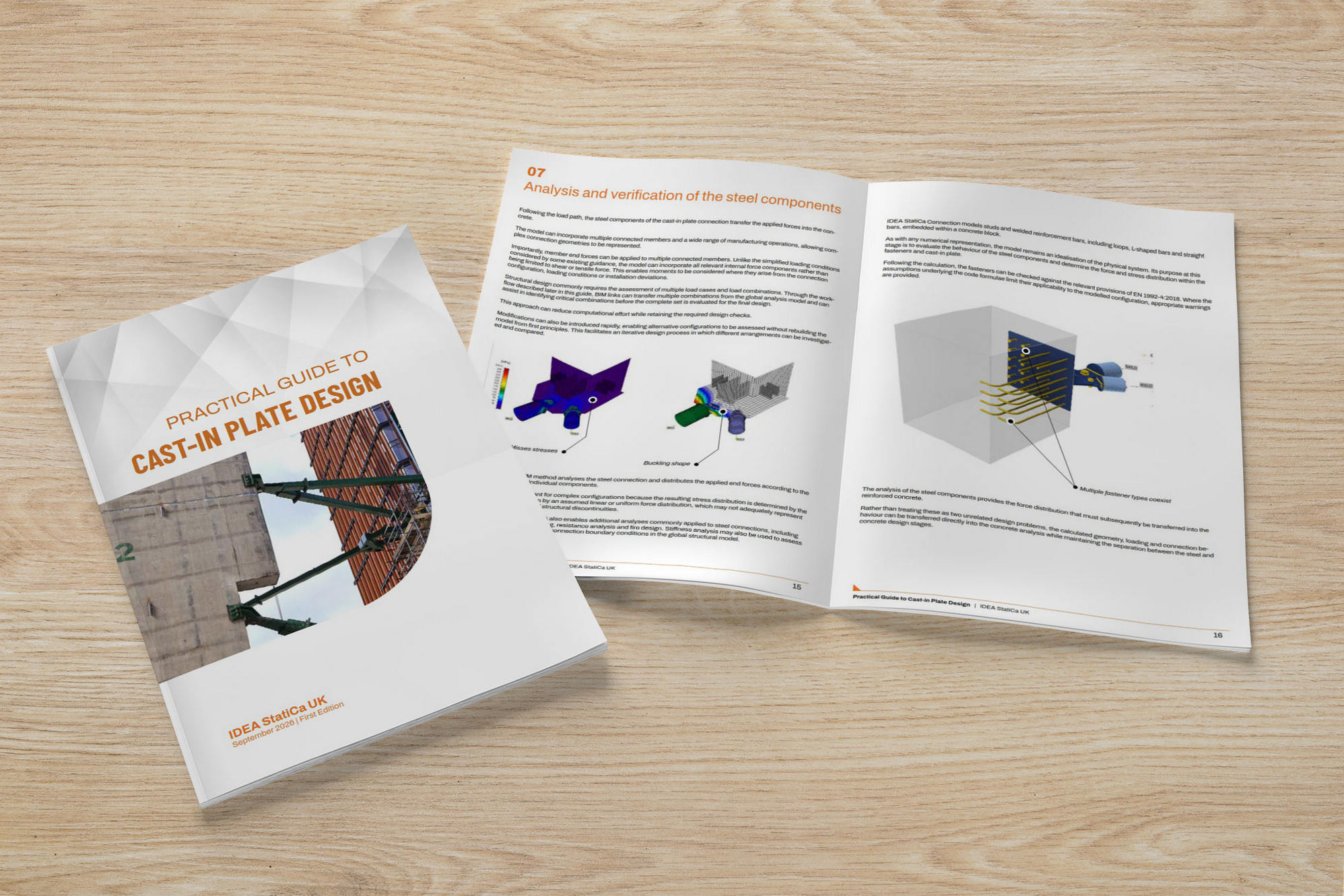
Cast-in plate design has arrived in IDEA StatiCa — and we’ve created a new 32-page technical guide to explore the engineering behind it.
Cast-in plates represent one of the more challenging interfaces in structural design. Steel connections, plates, anchors, reinforcement and concrete all contribute to the behaviour of the connection, but traditionally they have often been analysed using separate models, assumptions and design approaches.
The latest IDEA StatiCa workflow changes that.
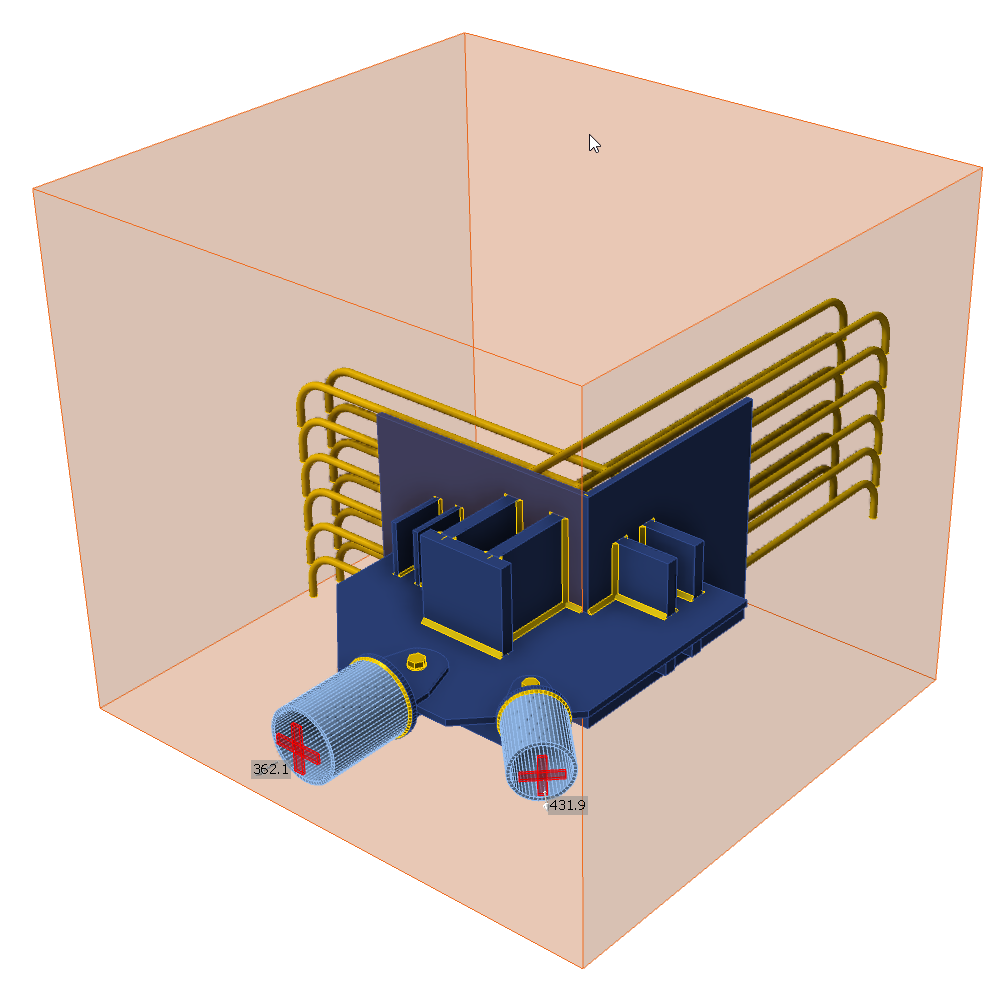
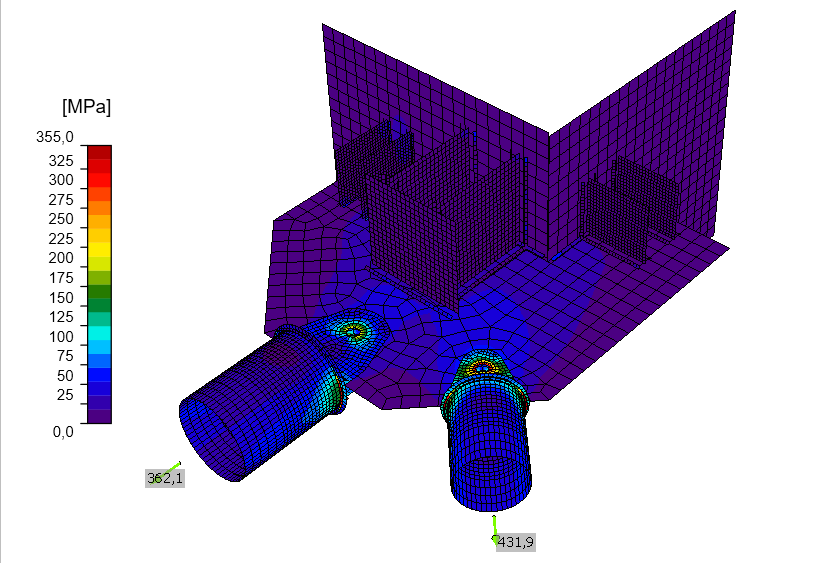
Engineers can now model and analyse the load transfer from the steel connection through the cast-in plate and anchors and into the reinforced concrete, creating a much clearer picture of how the complete connection behaves.
To accompany this new capability, IDEA StatiCa UK has published the Practical Guide to Cast-in Plate Design.
More than a software guide
The 32-page guide is not intended simply to explain which buttons to press.
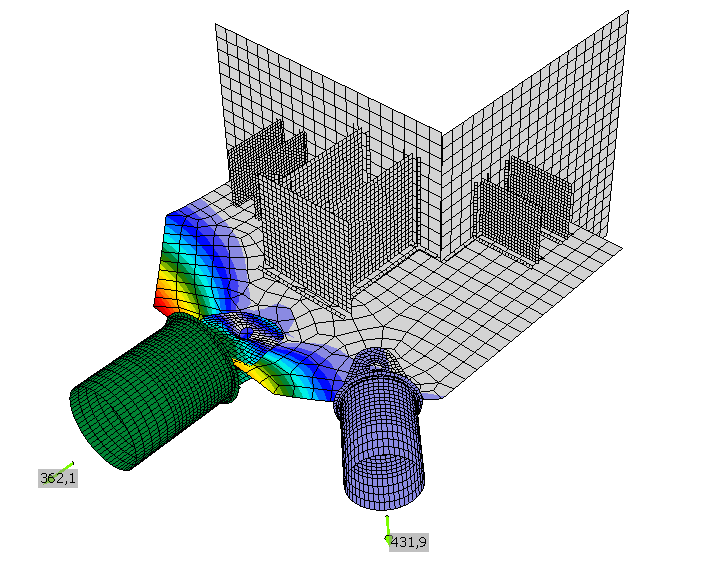
It explores the engineering behind cast-in plate design: how forces are transferred, how the steel and concrete parts of the connection interact, where existing design approaches can become challenging, and how numerical methods such as CBFEM and CSFM can help engineers investigate the complete load path.
Steel member → Connection components → Cast-in plate → Fasteners → Reinforcement & concrete → Global structure
The guide combines engineering background, design methodology and practical application, including a worked example demonstrating the IDEA StatiCa approach.
A new capability. A new engineering resource.
The introduction of cast-in plate design represents an important extension of the IDEA StatiCa workflow, connecting areas of steel and concrete design that have traditionally required several separate calculation processes.
We wanted to accompany that innovation with something equally practical: a technical resource engineers can use to better understand the principles behind the analysis, not simply the software itself.