


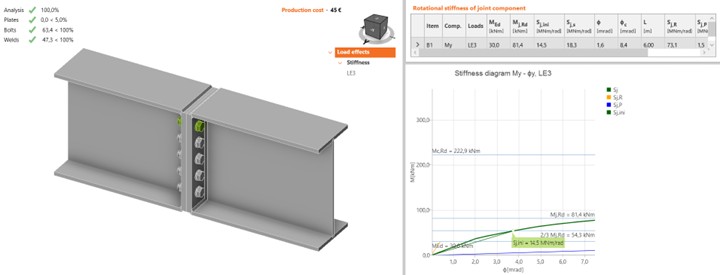
EN 1993-1-8 (Clause 6.1) defines the component method, where a joint is modelled as a set of springs representing the structural properties of the individual components that comprise the connection. Indicatively, we enumerate:
- the steel plates,
- the column web and flange,
- the end plate,
- and the bolt in tension.
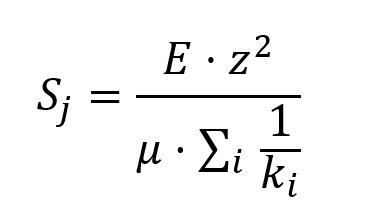
Specifically for rotational stiffness, each connection is decomposed into the specified components, and the stiffness of each component is calculated based on code-provided tables. Then, the beam-column or splice stiffness of the connection is assembled based on formula (6.27):
The bolt contributes through the stiffness of the tension component, denoted as  , which is not modified for preloaded bolts and depends only on geometric parameters:
· tensile area  ,
,
· bolt elongation length  .
.
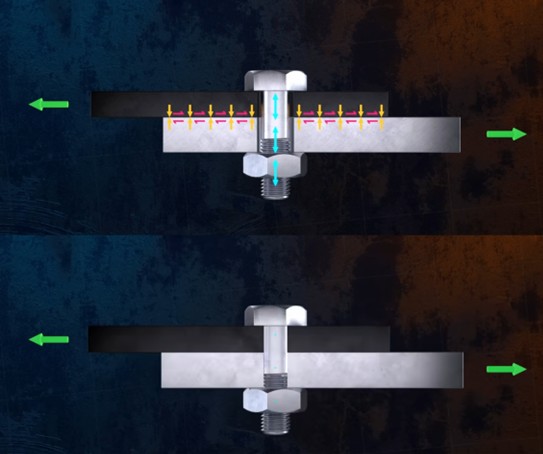
Subsequently, Eurocode does not assign any additional stiffness due to bolt preload. As such, bolt pretension is not included in the stiffness calculation for moment-resisting joints.
This is consistent with guidance documents such as SCI P398 “Joints in Steel Construction: Moment Connections,” which emphasize that preload is not a stiffness parameter for component-calibrated joint models.
In the 2nd generation of the Eurocodes, the principles of rotational stiffness calculation remain the same, with minor adjustments. The rotational stiffness assembly formula is identical (refer to EN 1993-1-8:2024 Annex B.4), replacing factor μ with η.
However, stiffness coefficients for bolts in tension now distinguish normal bolts from preloaded ones. For normal bolts, the proposed stiffness coefficient is identical to that in the current Eurocode generation (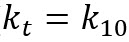 ). For preloaded bolts, however, an adjustment has been proposed, and the recommended value for their contribution is , leading to a significant increase in the connection’s rotational stiffness.
As we approach the release date of the latest generation of the Eurocodes, the IDEA StatiCa development team is working hard to incorporate the proposed code changes into our calculation core. As such, we expect to benefit from this code allowance and finally, calculate stiffer connections for preloaded bolt configurations.