We develop software for structural engineers and detailers. Our development team researches, tests, and applies new methods of analyzing the behaviour of structures and their members. Based on this, we created IDEA StatiCa – software that enables engineers to work faster, evaluate requirements of the national code thoroughly, and use the optimal amount of material. For us, creating software is a way to contribute to making every new construction around the world safer and cheaper.
The real challenge is not designing each component separately. It is understanding how they all work together.
One connection. Several engineering worlds.
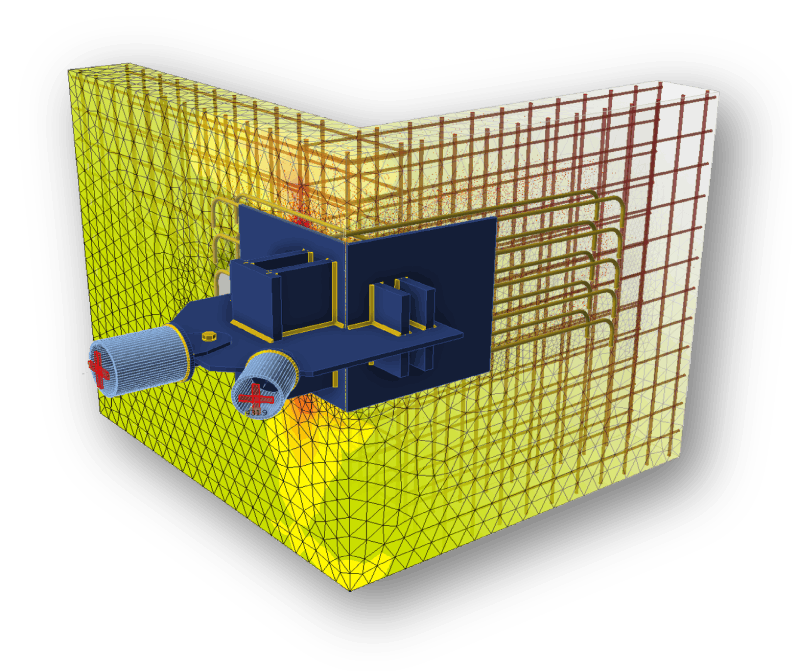
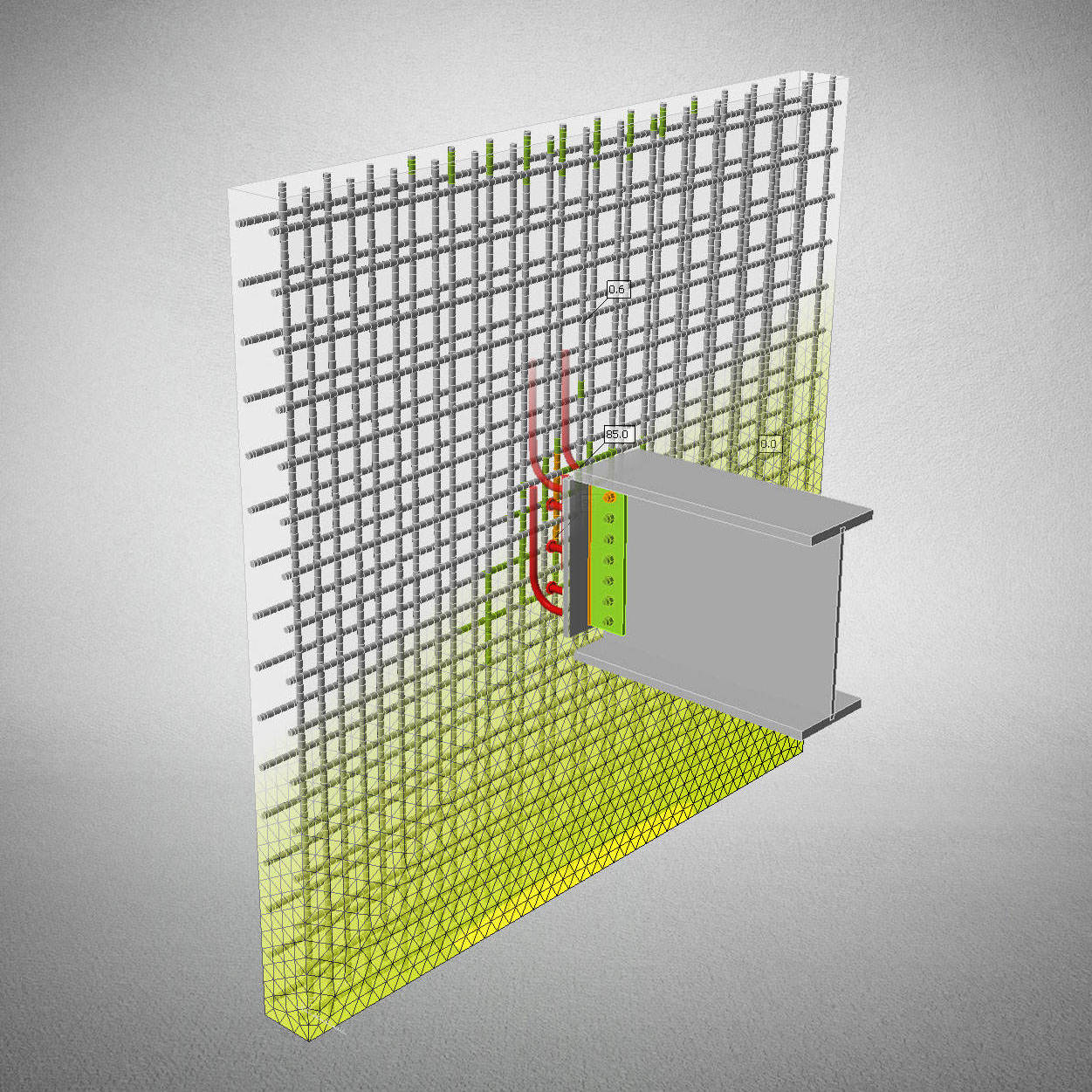
Cast-in plate connections bring steel, anchors and reinforced concrete together in one of the most demanding areas of structural connection design. IDEA StatiCa introduces a new way to analyse and design these connections – bringing the complete connection and its structural behaviour into one engineering workflow.
01
Steel
Members, stiffeners, plates and complex connection geometry.
02
Bolts-Welds
Load transfer through the fabricated steel connection.
03
Anchors-Studs
Forces transferred from the embedded plate into the concrete.
04
Concrete
Local stresses, reinforcement and the behaviour of the surrounding concrete region.
Beyond the simple cast-in plate
Cast-in plate connections can involve much more than a single beam transferring shear into a concrete wall. Multiple members, mixed fasteners, eccentric loading and complex concrete geometry can all influence how forces travel through the connection.
IDEA StatiCa provides a connected steel and concrete analysis workflow for investigating these more demanding arrangements.
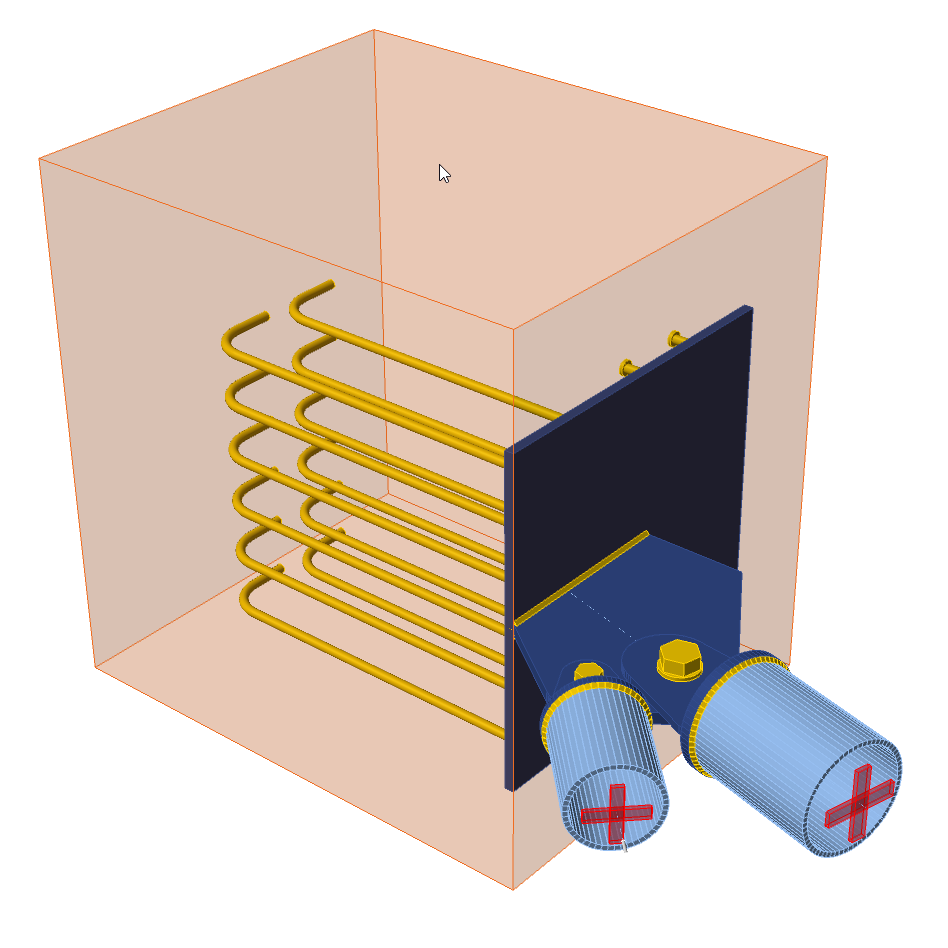
Mixed fasteners
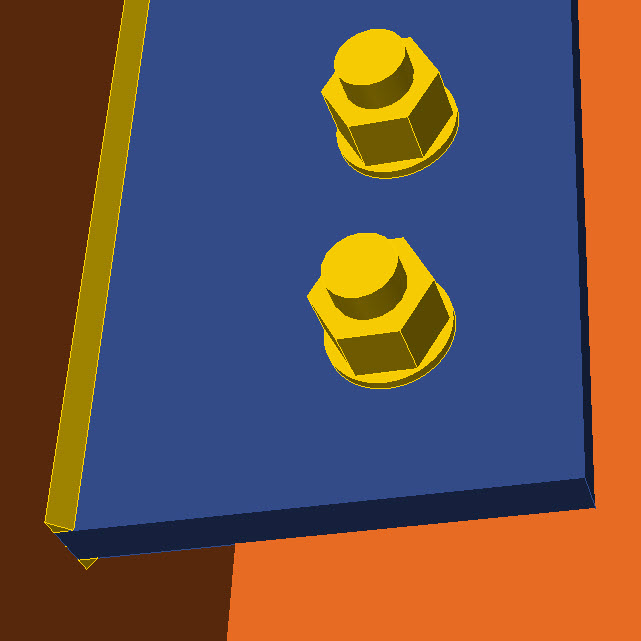
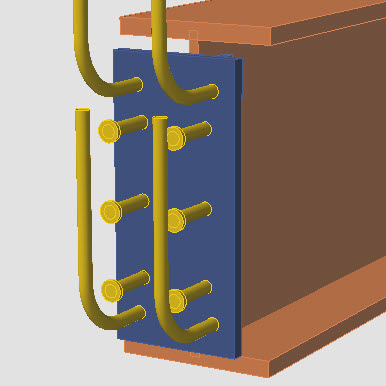
Studs, anchors and welded reinforcement may coexist within the same assembly. Their different stiffnesses and arrangements influence how forces are distributed between them.
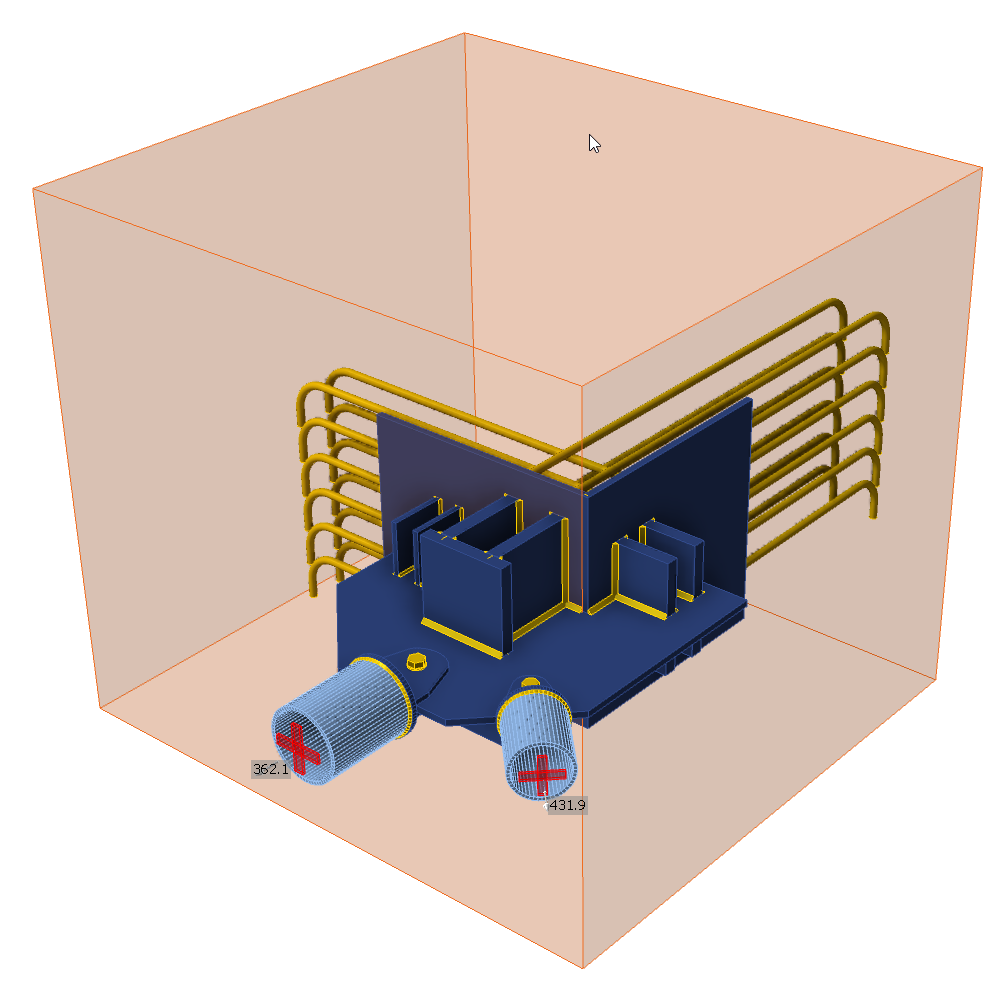
Corner connections
Plates positioned at wall corners can introduce forces into intersecting concrete regions, requiring the local geometry and interaction between fasteners to be considered.
Multiple members
Several members connected to one plate can introduce combined shear, axial forces and moments, creating a more complex load-transfer mechanism.
Openings and edges
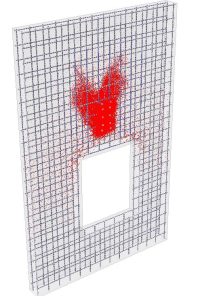
Nearby openings, wall edges and changes in geometry can alter the available load-transfer region and the response of the surrounding concrete.
The real challenge is not designing each component separately.
It is understanding how they work together.
Follow the complete load path.
IDEA StatiCa brings the steel connection, plate, anchors and concrete together into a connected engineering workflow.
Instead of simplifying a complex cast-in plate into isolated checks, engineers can investigate how forces move through the complete connection and understand its structural behaviour.
The analysis provides insight into the behaviour of the individual components and the load-transfer mechanism connecting them.
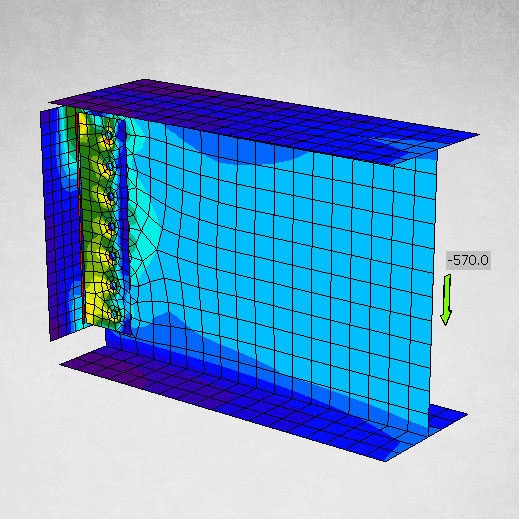
Steel stresses and deformation
Investigate how the cast-in plate and attached steelwork respond to the applied loading.
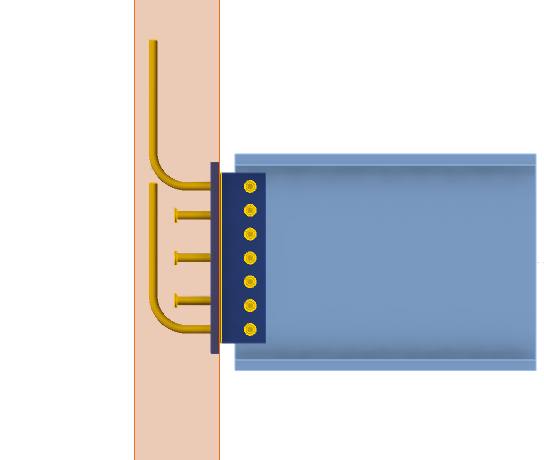
Forces in the fasteners
Review how forces are distributed between studs, anchors and welded reinforcement.
Concrete stresses and strains
Examine the local response of the concrete around the anchorage, including the influence of edges, corners and openings.
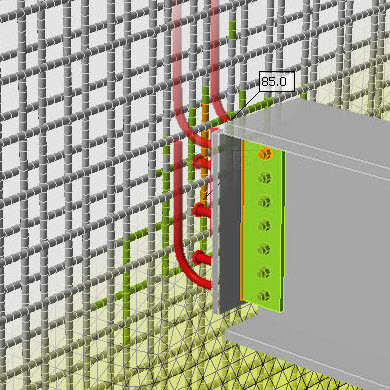
Reinforcement and anchorage
Review reinforcement stresses, bond stresses and anchoring forces to understand how reinforcement participates in carrying the load.
Load-transfer mechanisms
Visualise stress trajectories and the development of strut-and-tie mechanisms within the concrete region.
Watch the World Premiere
Missed the live webinar? Watch the recording and discover IDEA StatiCa’s new cast-in plate design solution, presented publicly for the first time by our UK team.
See how steel, studs, anchors, reinforcement and concrete come together in one integrated engineering workflow – and explore a new way to approach one of structural engineering’s most challenging connection details.
We developed this practical engineering guide to introduce and explain IDEA StatiCa’s new solution for cast-in plate design – how it works, the engineering challenges it addresses, and how it can be applied to real connections.
The guide takes you through the thinking behind the new solution, and how IDEA StatiCa brings these elements together into a single design workflow.
Can different fastener types be included in the same connection?
The modelling workflow can represent arrangements containing studs and welded reinforcement, enabling their force distribution to be investigated. The designer must still establish which design provisions and verification methods apply to the particular arrangement.
Can existing reinforcement be included?
Yes. Reinforcement within the concrete member can be explicitly represented in Detail 3D, allowing its response and contribution to local load transfer to be assessed.
Can corners and nearby openings be considered?
Relevant concrete geometry can be represented in the model, including corners, edges and openings that may affect the local structural response.
What transfers between Connection and Detail 3D?
The integrated workflow transfers connection geometry, calculated loading and associated load combinations from the steel connection model into the concrete analysis.
How does the workflow relate to SCI P416?
The workflow retains separate steel and concrete design stages and supports the exchange of information between them. SCI P416 remains relevant for configurations within its scope; more complex arrangements require project-specific assessment.
Does numerical analysis replace engineering judgement?
The designer remains responsible for the modelling assumptions, applicable standards and interpretation of results. Numerical analysis provides additional information to support those decisions.
We are celebrating this solution with an exclusive event:
The Cast-in Plates Forum – an exclusive gathering of leading engineers combining hands-on technical exploration, discussion and networking.
At the heart of the campaign is an exclusive in-person workshop and networking event, bringing together a carefully selected group of leading structural engineers, technical specialists and senior industry figures.
A chance to explore real cast-in plate challenges, experience the new IDEA StatiCa solution first-hand, and exchange ideas with some of the most respected people in the structural engineering community.
We are inviting structural engineers to submit difficult, unusual or interesting cast-in plate connections.
Our engineers will review your connection and get in touch with you directly to discuss the specific engineering challenges and demonstrate how the connection can be modelled, analysed and designed using IDEA StatiCa.